
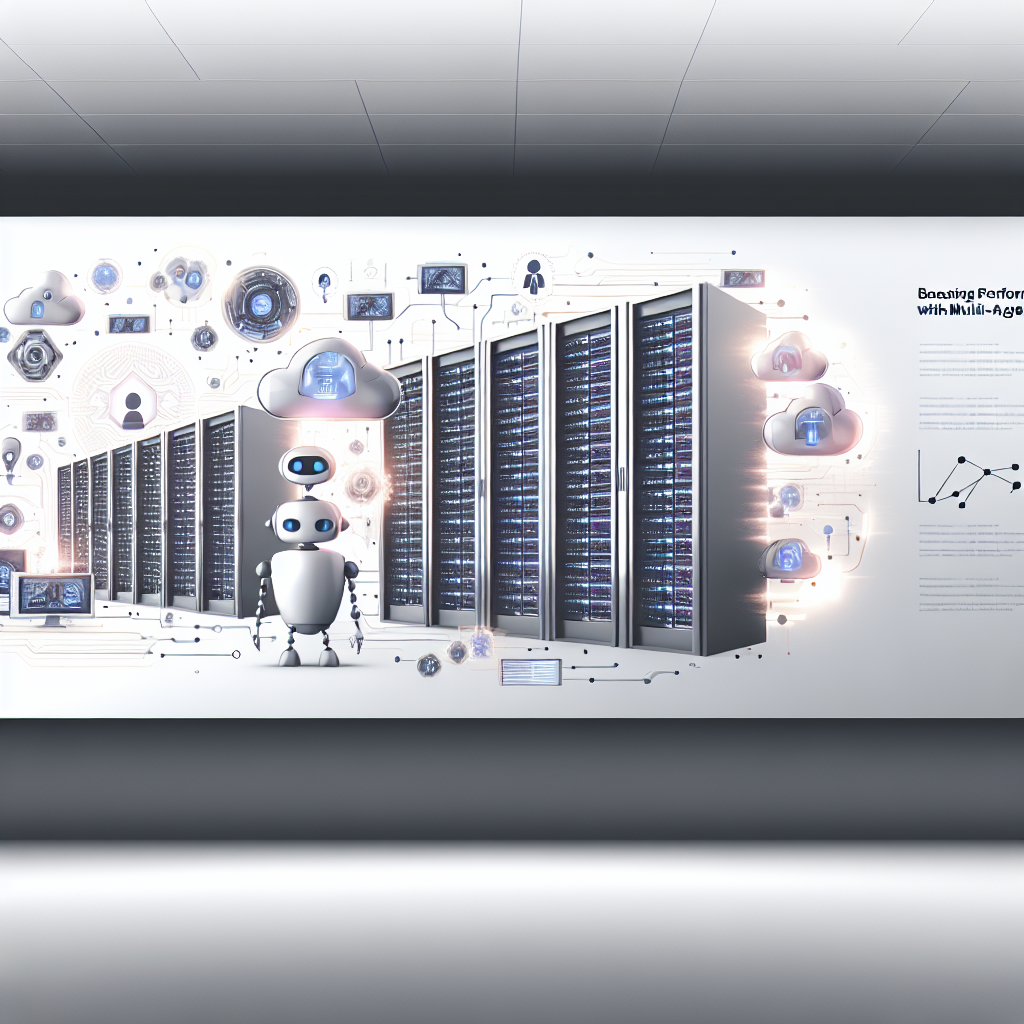
Boosting Performance with Multi-Agents
In the rapidly evolving landscape of artificial intelligence, the implementation of multi-agent architectures is becoming increasingly crucial. These systems, which involve multiple autonomous agents interacting within a shared environment, have shown remarkable potential in enhancing performance, scalability, and reliability across various applications. In this article, we will explore five multi-agent architectures and the common patterns that can significantly boost your operational efficiency.
Understanding Multi-Agent Architectures
At its core, a multi-agent system (MAS) consists of multiple agents that can communicate, collaborate, and compete to achieve specific goals. The main architectures include:
- Centralized Architecture: A single agent coordinates the actions of others, simplifying decision-making.
- Decentralized Architecture: Each agent operates independently, promoting resilience and flexibility.
- Hierarchical Architecture: Agents are organized in a hierarchy, allowing for structured decision-making.
- Federated Architecture: Multiple independent agents collaborate to solve complex problems, sharing insights without central control.
- Hybrid Architecture: Combines elements from various architectures to leverage their strengths.
Why Multi-Agent Systems Matter
The significance of multi-agent systems lies in their ability to handle complex workflows that single-agent systems struggle with. They are particularly beneficial in:
- Scalability: As tasks increase, more agents can be deployed without compromising performance.
- Reliability: The failure of one agent does not cripple the entire system, ensuring continuous operation.
- Efficiency: Agents can specialize in specific tasks, leading to faster and more accurate outcomes.
Practical Takeaways
To effectively implement multi-agent architectures in your organization, consider the following strategies:
- Define clear roles and responsibilities for each agent to prevent overlap and confusion.
- Utilize a robust communication protocol to facilitate seamless interaction between agents.
- Monitor performance metrics regularly to identify bottlenecks and optimize agent collaboration.
Conclusion
Embracing multi-agent architectures can revolutionize how your organization approaches complex tasks and workflows. By leveraging the strengths of these systems, you can achieve enhanced performance, scalability, and reliability.
If you’re looking to integrate AI solutions tailored to your needs, BlockNova offers a range of services including AI consulting, AI agent architecture, self-hosted LLM/AI agent hosting, and server hosting. Let us help you unlock the full potential of multi-agent systems in your organization.



0 Comments