
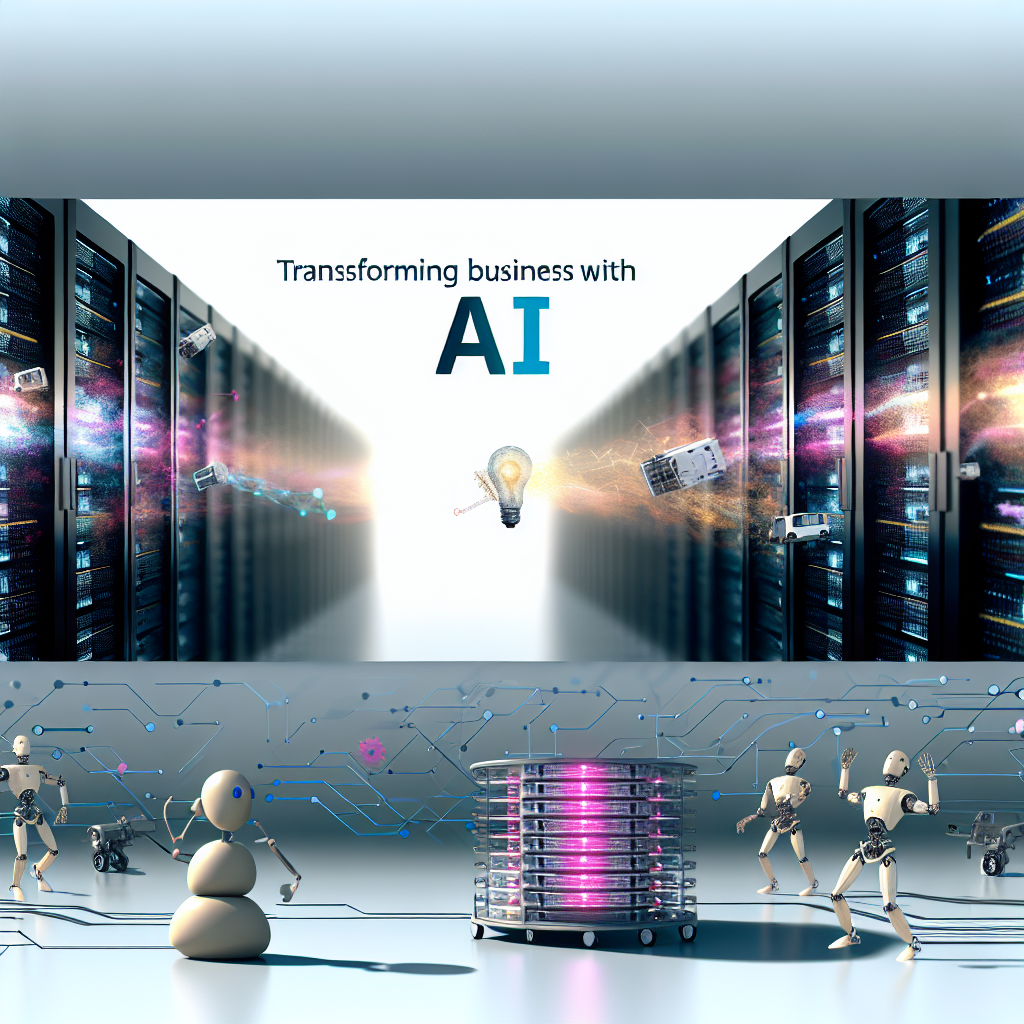
Transforming Business with AI
In today’s rapidly evolving digital landscape, businesses are increasingly turning to artificial intelligence (AI) to enhance their operations and drive efficiency. A recent exploration into multi-agent AI systems reveals how these technologies are not just a trend but a transformative force in enterprise automation.
What Are Multi-Agent AI Systems?
Multi-agent AI systems consist of numerous autonomous agents that collaborate to solve complex problems and perform tasks more efficiently than traditional single-agent systems. Each agent specializes in a specific function, enabling a division of labor that mirrors successful human teamwork.
- Collaboration: Agents communicate and coordinate efforts to achieve common objectives.
- Adaptability: These systems can adjust to new information and evolving circumstances, making them resilient in dynamic environments.
- Scalability: Businesses can scale operations by adding more agents as needed, allowing for growth without significant overhead.
Real-World Implementation Examples
Companies across various sectors are harnessing the power of multi-agent systems:
- Manufacturing: Automated agents optimize production lines by predicting maintenance needs and adjusting workflows in real-time.
- Customer Service: AI agents handle inquiries and complaints, providing personalized responses that enhance customer satisfaction.
- Supply Chain Management: Agents track inventory levels and demand fluctuations, ensuring timely restocking and reducing waste.
Why This Matters
The implementation of multi-agent AI systems is not just a technological upgrade; it represents a fundamental shift in how businesses operate. By leveraging specialized collaboration, organizations can achieve:
- Increased Efficiency: Tasks are completed faster and with fewer errors.
- Cost Savings: Automation reduces the need for manual intervention, lowering operational costs.
- Enhanced Decision-Making: Agents analyze data in real-time, providing insights that inform strategic decisions.
Practical Takeaways
For businesses looking to embrace AI, consider the following steps:
- Assess your current operations to identify areas where multi-agent systems can add value.
- Invest in training for your team to understand and manage AI technologies.
- Start small; pilot projects can demonstrate the benefits before full-scale implementation.
Conclusion
As we witness the evolution of AI technologies, it’s clear that multi-agent systems are here to stay. They offer a pathway to not only streamline processes but also to innovate how businesses operate in an increasingly competitive landscape.
If you’re looking to explore the potential of AI for your organization, BlockNova is here to help. We offer AI consulting services, AI agent architecture, self-hosted LLM/AI agent hosting, and server hosting to empower your business transformation. Let’s connect and start your AI journey today!



0 Comments