
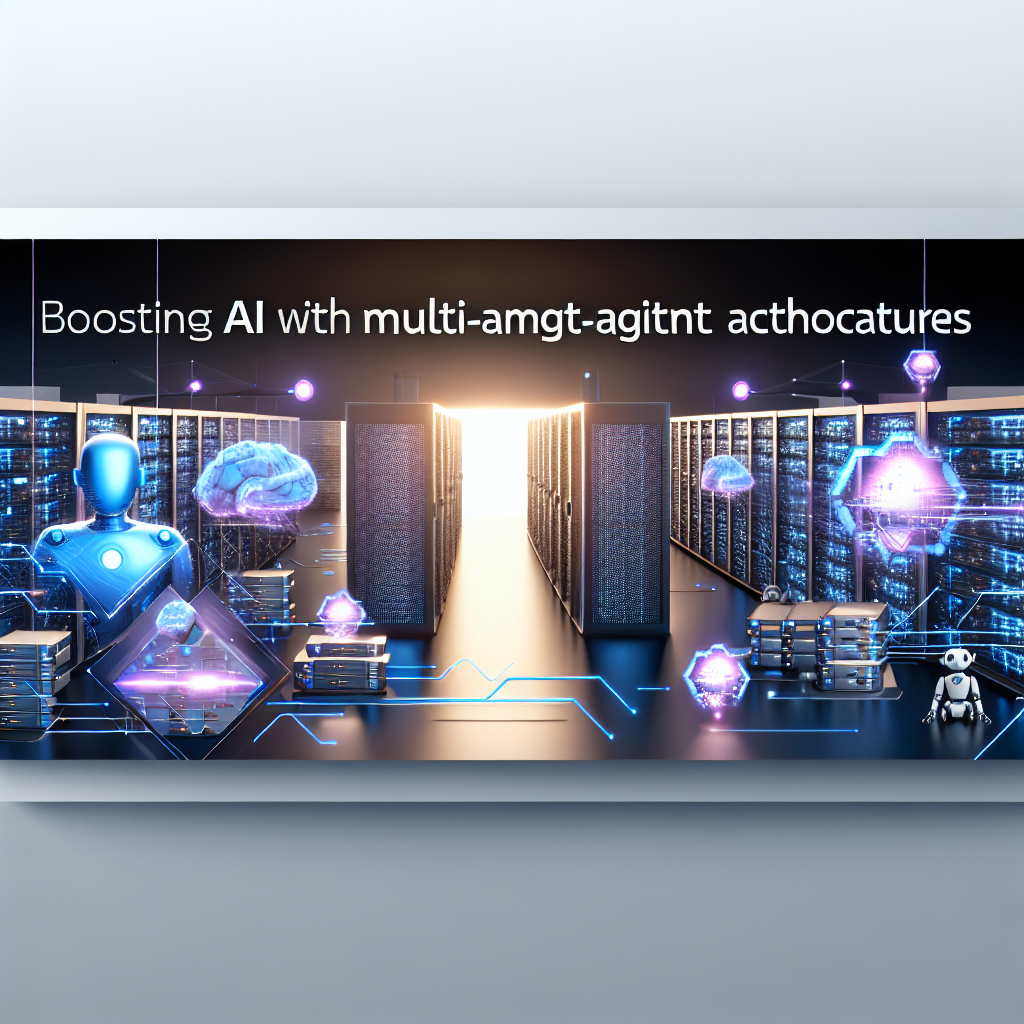
Boosting AI with Multi-Agent Architectures
In the rapidly evolving landscape of artificial intelligence, multi-agent architectures are emerging as a game-changer. These systems enable multiple intelligent agents to collaborate, enhancing performance, scalability, and reliability. But what does this mean for businesses and developers looking to leverage AI? Let’s dive in.
Understanding Multi-Agent Architectures
At its core, a multi-agent architecture consists of various autonomous agents that can communicate and coordinate with each other to achieve complex tasks. This setup is particularly beneficial for:
- Handling complex workflows
- Improving decision-making processes
- Facilitating real-time responses in dynamic environments
By structuring agents effectively, organizations can tackle challenges that single-agent systems struggle with, such as scalability and fault tolerance.
Why Multi-Agent Systems Matter
Multi-agent systems (MAS) are not just a theoretical concept; they have practical implications in various industries. Here’s why they matter:
- Enhanced Performance: Multiple agents can work in parallel, significantly speeding up processes.
- Scalability: As demand increases, adding more agents can be done seamlessly.
- Reliability: If one agent fails, others can take over, ensuring continuity.
These advantages make MAS a vital component for businesses aiming to stay competitive in the AI space.
Common Patterns in Multi-Agent Architectures
When implementing multi-agent systems, several patterns can be leveraged to maximize effectiveness:
- Hierarchical Structures: Organizing agents in a tiered manner for better management.
- Collaborative Agents: Agents that work together to solve problems, sharing information and resources.
- Reactive Agents: Responding to changes in the environment in real-time, ideal for dynamic situations.
Understanding these patterns can help teams design systems that are not only efficient but also adaptable to changing requirements.
Practical Takeaways
For organizations looking to adopt multi-agent architectures, consider the following:
- Assess your current workflows to identify areas where multi-agent systems could add value.
- Invest in training for your team to understand the intricacies of agent collaboration.
- Experiment with small-scale implementations before scaling up.
By taking these steps, businesses can unlock the full potential of AI in their operations.
Get Started with BlockNova
At BlockNova, we specialize in AI consulting, agent architecture, and self-hosted LLM/AI agent hosting. Our team is here to guide you through the complexities of multi-agent systems and ensure your organization is well-equipped for the future of AI.
Let’s transform your AI strategy together!



0 Comments