
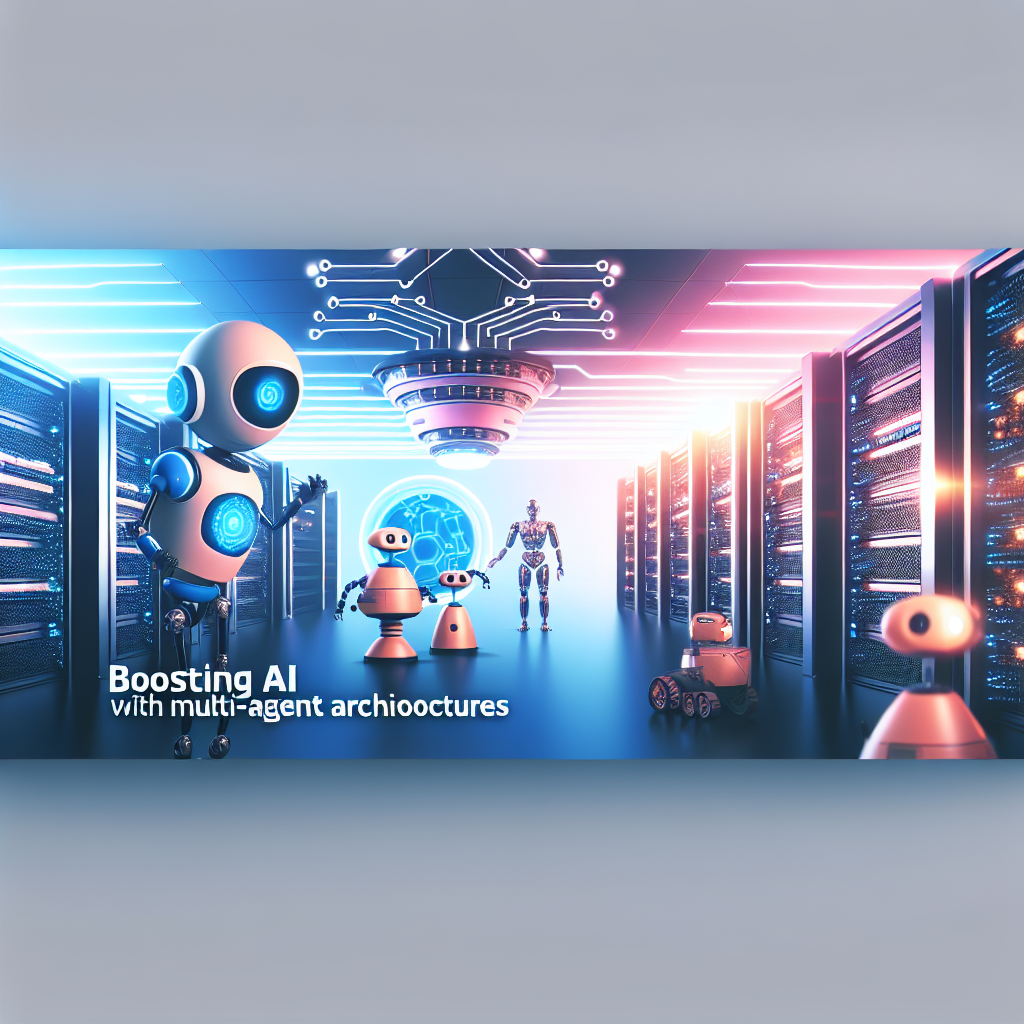
Boosting AI with Multi-Agent Architectures
In the ever-evolving landscape of artificial intelligence, multi-agent architectures are emerging as a powerful solution to enhance performance, scalability, and reliability. These architectures allow for the orchestration of multiple AI agents, enabling them to collaborate and tackle complex workflows more efficiently.
Understanding Multi-Agent Architectures
Multi-agent architectures consist of multiple autonomous agents that work together to achieve common goals. Each agent can perform specific tasks, communicate with others, and adapt to changing environments. This collaborative approach is particularly beneficial for:
- Handling large datasets
- Improving response times
- Facilitating complex decision-making processes
Why Multi-Agent Architectures Matter
As businesses increasingly rely on AI to drive innovation, the need for robust, scalable solutions becomes paramount. Multi-agent systems can:
- Enhance fault tolerance by distributing tasks across agents
- Improve resource utilization through dynamic load balancing
- Support complex interactions and workflows that single-agent systems cannot manage
By leveraging these architectures, organizations can unlock new levels of efficiency and effectiveness in their AI applications.
Common Patterns in Multi-Agent Systems
Several patterns can be observed in successful multi-agent architectures:
- Hierarchical Structures: Organizing agents in a hierarchy can streamline decision-making and improve coordination.
- Collaborative Learning: Agents can share knowledge and experiences, leading to continuous improvement in performance.
- Negotiation and Conflict Resolution: Implementing mechanisms for agents to negotiate can enhance cooperation and optimize outcomes.
Practical Takeaways for Implementing Multi-Agent Architectures
To effectively implement multi-agent architectures, consider the following steps:
- Identify specific use cases where collaboration among agents can add value.
- Design agents with clear roles and responsibilities to avoid overlaps.
- Utilize communication protocols that enable seamless interaction among agents.
By following these guidelines, organizations can harness the full potential of multi-agent systems.
Conclusion
Multi-agent architectures are not just a trend but a transformative approach to enhancing AI capabilities. As we continue to explore their potential, businesses must adapt and innovate to stay competitive in this rapidly changing landscape.
If you’re looking to integrate advanced AI solutions into your operations, BlockNova offers a range of services, including AI consulting, AI agent architecture, self-hosted LLM/AI agent hosting, and server hosting. Let us help you boost your AI capabilities today!

0 Comments