
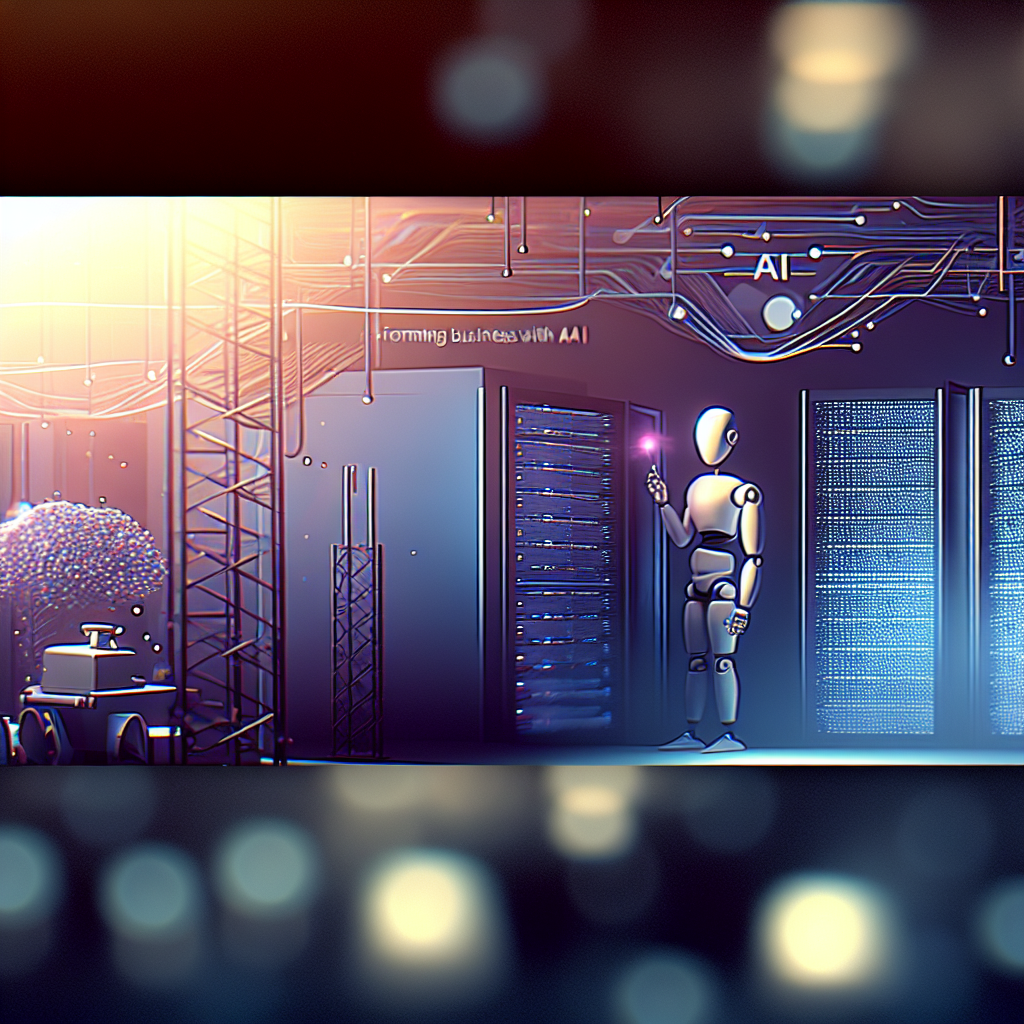
Transforming Business with AI
In today’s fast-paced digital landscape, businesses are constantly seeking innovative ways to enhance operations and drive efficiency. One of the most promising advancements in this realm is the emergence of multi-agent AI systems. These systems leverage specialized collaboration among AI agents to streamline processes, improve decision-making, and ultimately transform business operations.
What Are Multi-Agent AI Systems?
Multi-agent AI systems consist of multiple autonomous agents that work together to achieve common goals. Each agent is designed to handle specific tasks, allowing for a division of labor that enhances productivity. This collaborative approach can lead to faster problem-solving and more efficient workflows.
Real-World Implementation Examples
Several organizations have already begun to harness the power of multi-agent AI systems. For instance:
- Manufacturing: Companies are using AI agents to monitor equipment, predict maintenance needs, and optimize production schedules.
- Healthcare: AI agents assist in patient management, helping to streamline appointment scheduling and improve patient outcomes.
- Finance: Financial institutions employ AI agents to analyze market trends, manage risk, and automate trading strategies.
Why It Matters
The shift toward multi-agent AI systems is significant for several reasons:
- Increased Efficiency: By automating repetitive tasks and improving coordination, businesses can save time and resources.
- Enhanced Decision-Making: AI agents can analyze vast amounts of data quickly, providing insights that lead to better-informed decisions.
- Scalability: Multi-agent systems can easily adapt to changing business needs, making them ideal for growing organizations.
Practical Takeaways
As we move forward, businesses should consider the following when integrating multi-agent AI systems:
- Identify specific tasks that can be automated or improved through AI collaboration.
- Invest in training and development to ensure your team is equipped to work alongside AI systems.
- Monitor and evaluate the performance of AI agents to continually refine their effectiveness.
In conclusion, embracing multi-agent AI systems offers a pathway to significant operational improvements. As businesses continue to explore AI’s potential, those who adapt early will likely gain a competitive edge.
If you’re looking to implement AI solutions in your organization, consider partnering with BlockNova. Our services include AI consulting, AI agent architecture, self-hosted LLM/AI agent hosting, and server hosting. Let us help you transform your business with the power of AI.



0 Comments