
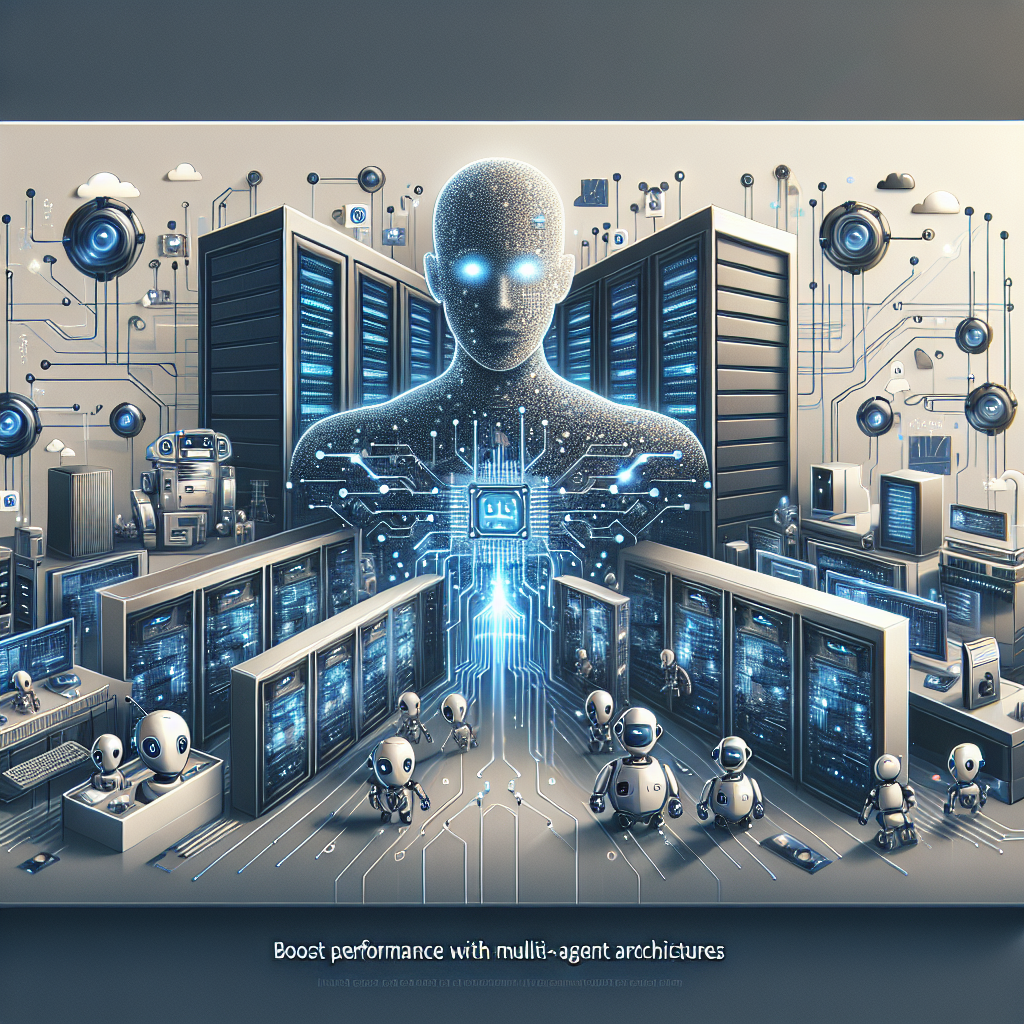
Boost Performance with Multi-Agent Architectures
In today’s rapidly evolving technological landscape, the demand for efficient and scalable solutions has never been greater. Multi-agent architectures are emerging as a powerful approach to enhance performance, scalability, and reliability in complex workflows. In this article, we explore five multi-agent architectures and the common patterns that can help organizations optimize their operations.
Understanding Multi-Agent Architectures
Multi-agent architectures consist of multiple autonomous agents that interact and collaborate to achieve specific goals. These agents can be software programs, robots, or even human operators, each designed to handle distinct tasks within a workflow. By distributing responsibilities, organizations can improve efficiency and foster innovation.
Why Multi-Agent Architectures Matter
As businesses face increasing complexity, multi-agent systems offer several advantages:
- Scalability: Easily scale operations by adding more agents without overhauling the entire system.
- Reliability: If one agent fails, others can continue functioning, minimizing downtime.
- Performance: Parallel processing allows for faster task completion and more efficient resource utilization.
Key Multi-Agent Architectures
Here are five notable multi-agent architectures that can significantly boost performance:
- Hierarchical Agent Architecture: Organizes agents in a hierarchy, allowing for clear delegation of tasks.
- Collaborative Agent Architecture: Agents work together to solve problems, sharing knowledge and resources.
- Decentralized Agent Architecture: Each agent operates independently, promoting resilience and flexibility.
- Federated Learning Architectures: Agents learn from local data while contributing to a global model, enhancing privacy and efficiency.
- Reactive Agent Architecture: Agents respond to environmental changes in real-time, making them ideal for dynamic settings.
Practical Takeaways
To effectively implement multi-agent architectures, consider the following:
- Assess your organization’s specific needs and workflows to determine the most suitable architecture.
- Encourage collaboration among agents to maximize knowledge sharing and efficiency.
- Invest in robust monitoring and management tools to oversee agent performance and interactions.
Conclusion
Multi-agent architectures present a promising solution for organizations looking to enhance their operational capabilities. By leveraging the strengths of distributed agents, businesses can navigate complex workflows with greater agility and resilience.
At BlockNova, we specialize in providing AI consulting services, AI agent architecture, and self-hosted LLM/AI agent hosting solutions. Let us help you harness the power of multi-agent systems to drive your organization forward.

0 Comments