
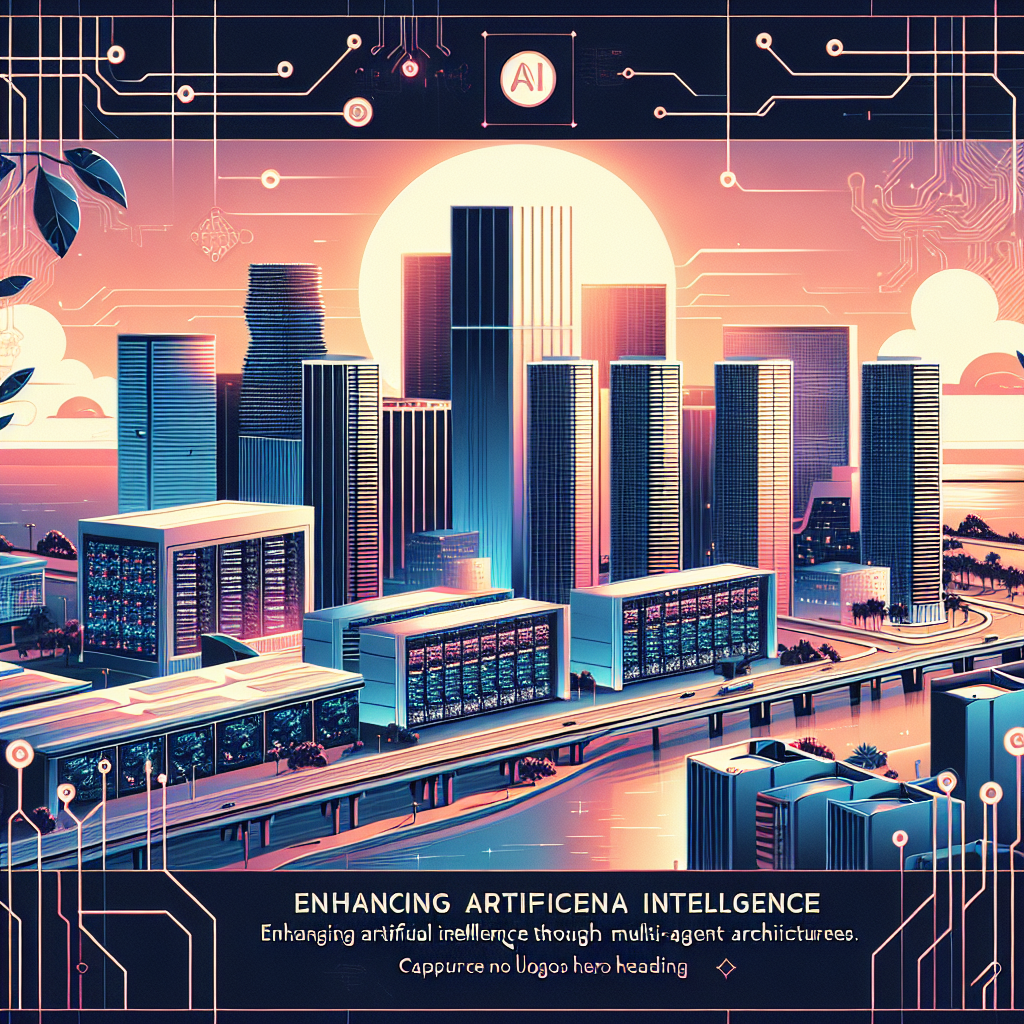
Boost AI with Multi-Agent Architectures
In recent years, the rise of artificial intelligence has sparked innovative approaches to problem-solving, particularly through the implementation of multi-agent architectures. These frameworks enable various AI agents to collaborate, enhancing performance, scalability, and reliability. As Florida continues to position itself as a tech hub, understanding these architectures is crucial for businesses looking to leverage AI effectively.
What Are Multi-Agent Architectures?
Multi-agent architectures involve multiple autonomous entities (agents) that interact to achieve specific goals. These agents can operate independently or work collaboratively, allowing for more complex workflows and decision-making processes. Here are five notable architectures:
- Centralized Architecture: A single agent controls others, simplifying coordination.
- Decentralized Architecture: Each agent operates independently, enhancing resilience.
- Hierarchical Architecture: Agents are organized in a hierarchy, facilitating structured communication.
- Cooperative Architecture: Agents work together towards a common goal, optimizing resource utilization.
- Competitive Architecture: Agents compete for resources, driving innovation and efficiency.
Why It Matters for Miami and Florida
As Miami emerges as a key player in the tech landscape, the adoption of multi-agent architectures can significantly impact local industries. With a growing number of startups and established companies investing in AI, leveraging these architectures can:
- Enhance operational efficiency.
- Boost innovation through collaborative problem-solving.
- Attract talent and investment to the region.
Moreover, as businesses in sectors like finance, healthcare, and logistics increasingly rely on AI, understanding these frameworks will be essential for maintaining a competitive edge.
Practical Takeaways
Implementing multi-agent architectures requires thoughtful planning and execution. Here are some practical steps:
- Assess your organization’s needs to determine the most suitable architecture.
- Invest in training for your team to understand agent-based systems.
- Start with pilot projects to test the effectiveness of multi-agent frameworks before full-scale implementation.
Conclusion
As we look to the future, the integration of multi-agent architectures in AI will be pivotal for businesses aiming to thrive in a competitive landscape. For those in Miami and throughout Florida, embracing these innovations can lead to improved outcomes and growth opportunities.
If you’re looking to explore how these technologies can benefit your organization, consider BlockNova’s services. We specialize in crypto mining advisory, self-hosted LLM/AI agent hosting, and server hosting solutions tailored to your needs. Let’s unlock the potential of AI together!

0 Comments